Table of Content
Large bay home windows allow guests to observe scientists at work, gently scraping away at the fossil stays of ancient crocodiles and other bygone critters. Kid-friendly displays, colorful dioramas, and replicas of historic animals and vegetation convey these discoveries to life to a new generation. The Sheep Rock Unit has eight trails ranging in size from 300 ft on the Mascall Formation Overlook to three miles (4.8 km) at Blue Basin.
Beginning within the Nineteen Sixties John Rensberger, one other UCMP pupil, studied the stratigraphic succession of aplodontids in the Oligocene John Day Formation. Howard Hutchinson, a former vertebrate collections supervisor and museum scientist, studied a quantity of mammalian taxa from japanese Oregon. The rocks and fossils of the John Day Basin are the one near continuous record of change in plant and animal life from the Pacific Northwest. They present how climates fluctuated and became cooler and drier via time and sometimes have the oldest records of animals migrating across the Bering Straits into North America from Asia. These are additionally key faunas for continent-wide studies of how animals respond to climate change, similar to MIOMAP, a project developed at Berkeley by Tony Barnosky and Marc Carrasco. Just up the road, the Thomas Condon Paleontology Center doubles as a year-round customer middle and one-of-a-kind research lab.
City Of Fossil
The Thomas Condon Center consists of offices and laboratories in addition to reveals of the fossils and ecosystems via time. The Painted Hills Unit is aptly named for the pink and gold beauty of the hills which could be viewed on the paths. The Painted Hills Unit is located 9 miles northwest of Mitchell along Burnt Ranch Road, which intersects U.S. Subsequent ashfall from eruptions within the Cascade Range within the late Miocene contributed to the Mascall Formation, layers of stream-deposited volcanic tuffs laid atop the Picture Gorge Basalt. Preserved within the Mascall are fossils of animals such as horses, camels, rhinoceroses, bears, pronghorn, deer, weasels, raccoons, cats, dogs, and sloths. These fauna thrived within the monument's open woodland and savannah between 15 and 12 million years ago.
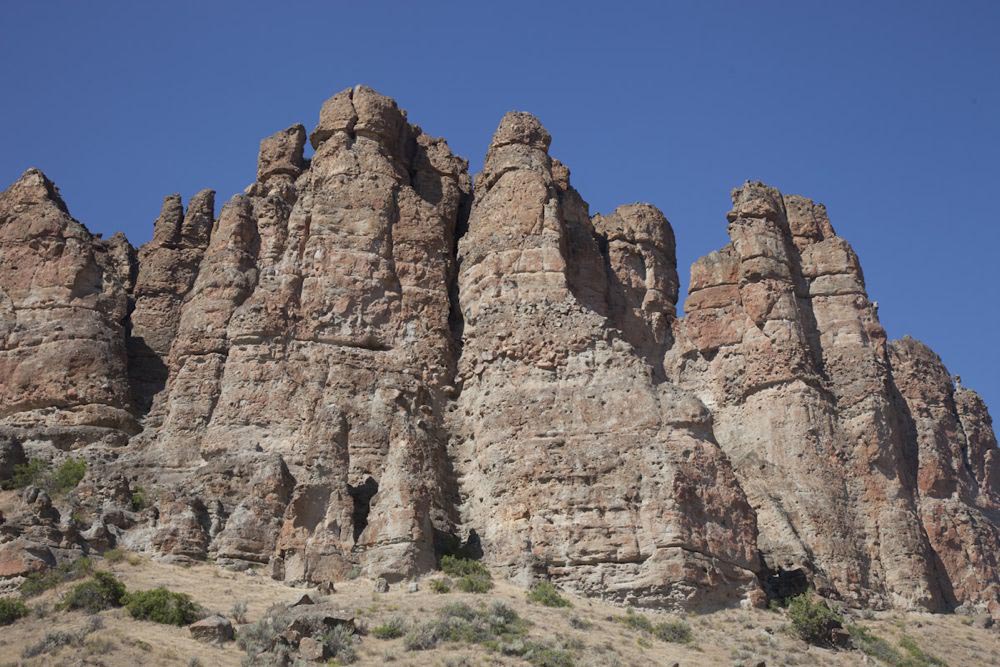
The Clarno Unit, close to the John Day River’s Clarno Bridge, includes huge volcanic particles flows and lahars which may be forty five to 50 million years in age. Leaves and whole bushes, discovered as petrified remnants, record a subtropical ecosystem similar to that found in modern Costa Rica or Veracruz, Mexico. Early ancestral bananas, figs, palms, and bald cypress flourished amid a volcanic panorama. Rainfall totaled about eighty inches per yr, and atmospheric carbon dioxide was a lot larger than today’s ranges.
Select Allgeneral Curiosity Guides
The first settler in what grew to become the Sheep Rock Unit is believed to have been Frank Butler, who built a cabin along the river in 1877. In 1881, Eli Casey Officer started grazing sheep on a homestead claim in same general space. His son Floyd later lived there together with his household and sometimes accompanied Condon on his fossil hunts. In 1910, James and Elizabeth Cant purchased 700 acres from the Officer household. And transformed it to a sheep ranch, which was finally expanded to a sheep-and-cattle ranch of about 6,000 acres . Early inhabitants of north-central Oregon included Sahaptin-speaking individuals of the Umatilla, Wasco, and Warm Springs tribes in addition to the Northern Paiutes, audio system of a Uto-Aztecan language.
In addition to getting ready fossils, the paleontologists coordinate the monument's fundamental research in paleobotany and other scientific areas and handle the fossil museum within the visitor heart. Sheep Rock Unit, to the east of the Painted Hills , is the park's most expansive site and the best place to get pleasure from a well-rounded introduction to the monument. While it is potential to get a really feel for the world on a scenic drive, native mountaineering trails are the finest way to get an upclose look at fossils in situ. The major location to visit at John Day Fossil Beds is the Sheep Rock unit.
This unit is usually in Grant County; a small part extends into Wheeler County. The Sheep Rock Unit is additional subdivided into the Mascall Formation Overlook, Picture Gorge, the James Cant Ranch Historic District, Cathedral Rock, Blue Basin, and the Foree Area. Some of those are separated from each other by farms, ranches, and other parcels of land that aren't part of the park. Within the closely eroded volcanic deposits of the scenic John Day River basin is a well-preserved fossil report of vegetation and animals.

Four trails of a quarter-mile to 1.5 miles (2.four km) long cross parts of the Painted Hills Unit. At the Clarno Unit, three separate quarter-mile trails start at a car parking zone along Oregon Route 218, below the face of the Clarno Palisades. Visitors are requested to stay on the paths and off bare rock and hardpan to avoid harm to fossils and fragile soils.
Historical Past
Two fossilized teeth discovered just lately within the Rattlesnake stratum near Dayville are the earliest report of beaver, Castor californicus, in North America. The beaver enamel, that are about 7 million years old, have been scheduled for show on the Condon Center. The models cover a complete of thirteen,944 acres of semi-desert shrublands, riparian zones, and colorful badlands. About 210,000 folks visited the park in 2016 to interact in outside recreation or to visit the Thomas Condon Paleontology Center or the James Cant Ranch Historic District. Junior Ranger Program - The Junior Ranger booklet can be picked up at the customer center. The Blue Basin Overlook Trail is located at the Blue Basin Trailhead and is a three.25-mile loop path with over 600 feet of elevation gain/loss.
The Clarno Unit, the westernmost of the three items, consists of 1,969 acres positioned 18 miles west of Fossil along Oregon Route 218. The Painted Hills Unit, which lies about midway between the other two, covers 3,132 acres . It is located about 9 miles northwest of Mitchell alongside Burnt Ranch Road, which intersects U.S. The remaining 8,843 acres of the park, the Sheep Rock Unit, are located alongside Oregon Route 19 and the John Day River upstream of the unincorporated group of Kimberly.
Fossils Of The John Day Area
The barren landscape is punctuated by bands of soil in vivid shades of gold, purple, black, and orange. Multiple straightforward trails discover the terrain, including the Painted Cove Trail, which traverses a boardwalk set amid giant mounds of rust-red claystone. More than 80 soil types assist all kinds of flora inside the monument. These soils stem from previous and current geologic activity as properly as ongoing additions of organic matter from life types on or near the floor. Important to many of those communities is a black cryptobiotic crust that resists erosion, shops water, and fixes nitrogen utilized by the plants. Volcanic tuffs and claystones that lack important nutrients help few microorganisms and crops.
Geese nest within the park each summer time, and flocks of sandhill cranes and swans move overhead every year on their migratory flights. Others seen close to the Cant Ranch and the customer center embrace rufous hummingbirds, Say's phoebe, yellow warblers, western meadowlarks, and American goldfinches. Visitors on trails could encounter canyon wrens, mountain bluebirds, mountain chickadees, black-billed magpies, and other birds. Pets are allowed in developed areas and along hiking trails however should be leashed or in any other case restrained. Horses usually are not allowed on climbing trails, in picnic areas, or on naked rock exposures in undeveloped areas of the monument.
All were hunter-gatherers competing for sources such as elk, huckleberries, and salmon. Researchers have recognized 36 sites of related archeological curiosity, including rock shelters and cairns, in or adjacent to the John Day Fossil Beds National Monument. Most important among the many prehistoric sites are the Picture Gorge pictographs, consisting of six panels of rock art within the canyon at the south end of the Sheep Rock Unit. Sign as a lot as obtain the most recent NPF information, info on how you can support our national treasures, and travel ideas for your next journey to the parks.





No comments:
Post a Comment